Get diagnosed and treated from home. No mask. No machine. No CPAP required. A board-certified sleep specialist guides every step. Before the program ends, you will know with certainty what works for you.
Start Your Free Assessment at SleepHealthAssessment.comYou wake up tired no matter how long you sleep. Your partner complains about the snoring. You fall asleep in the afternoon without meaning to. You have been living with this long enough that it feels normal.
It is not normal.
Sleep apnea is a serious medical condition. It raises your risk of heart disease, stroke, high blood pressure, and diabetes. It affects your memory, your mood, and your ability to concentrate. Most people adjust to feeling worse rather than finding out what is causing it.
Some people who find this program have never been tested for sleep apnea and they need answers. Some were tested, diagnosed, and prescribed a CPAP machine that did not work for them. Some are using CPAP and just need something that works when CPAP does not.
Different starting points. Same goal: the smartest path to effective sleep apnea therapy.
TotalCare Sleep Health is a complete sleep apnea care program built around one goal: getting you to effective therapy as fast as possible, without unnecessary steps, and without assuming CPAP is the answer.
Assessment, diagnosis, therapy, and clinical verification. All connected. All from home. In less than thirty days.
One program. One specialist team. One measure of success: proven effective therapy.
You suspect you have sleep apnea but have not pursued diagnosis because you do not want CPAP. You are exhausted during the day. Your partner is worried. You need a clear path to a definitive answer and effective treatment.
You were diagnosed and prescribed CPAP, but you stopped using it. The mask was uncomfortable. The machine was disruptive. You still need treatment. You need an alternative that works without the barriers that made you quit.
CPAP works for you but it is not always practical. Travel, camping, power outages, sleeping away from home. Bongo Rx gives you an objectively validated alternative for every situation where CPAP is not an option.
All three patients have the same core need: effective therapy. The program serves all three.
Most sleep apnea programs provide a device and wish you luck. We provide a device, coach and support you through the process of getting started with it, and then measure whether it works. With clinical precision.
Your sleep specialist sees your complete picture at every step. Diagnostic baseline. On-therapy performance. Compared directly. No guessing. No assuming. Objective proof.
That is not a small distinction. It is the entire difference between assumption and medicine.
CPAP is the gold standard for keeping the airway open. It reduces AHI by 90% or more. No other therapy matches that mechanical power. But keeping the airway open is only half the equation.
The clinical efficacy of any sleep apnea therapy is a product of two factors: its power (AHI reduction) and its compliance (hours actually used). A therapy that works perfectly but sits in a closet delivers zero benefit. This is the concept of Mean Disease Alleviation. The therapy that produces the best real-world outcome is not necessarily the strongest. It is the strongest therapy you will actually use every night.
The table below shows what that looks like across the three primary therapies.
| Metric | EPAP (Nasal Valve) | MAD (Oral Appliance) | CPAP (Pressure) |
|---|---|---|---|
| Adherence Rate | High (~80–88%) | High (~76–82%) | Low (~43–60%) |
| Invasiveness | Lowest (no power, no mask, no custom device) | Low (dental device) | High (mask, hose, motor) |
| AHI Reduction | ~30–50% | ~55–72% | ~90%+ |
| Daytime Sleepiness | Improved | Significantly Improved | Significantly Improved |
When you account for adherence, the population-level picture changes significantly. Out of 100 patients:
CPAP's mechanical power advantage narrows considerably once adherence enters the equation. MAD outperforms both at the population level. And EPAP, the least invasive and least expensive option, closes the gap with CPAP more than the raw numbers suggest.
This is why the program starts with EPAP. Not because it is the most powerful therapy. Because it is the least invasive, least expensive, fastest to start, and requires no specialist fitting, dental device, or prescription equipment beyond what ships to your door.
For many patients it delivers sufficient control. For those it does not, the titration data says so clearly, and the next step is defined.
AHI and adherence are both essential. But they are not the only factors that determine whether a therapy actually works for you in your life.
Sleep quality is not the same as AHI. A therapy can suppress apnea events while still disrupting your sleep in other ways. CPAP is the clearest example. Mask discomfort, air leaks, pressure changes during the night, hose position, and the difficulty some patients experience breathing against continuous pressure can all cause arousals. Arousals that the CPAP machine does not record. Arousals that do not show up in your AHI. But that leaves you waking unrefreshed, wondering why a therapy your data says is working still leaves you exhausted.
This is not a reason to avoid CPAP. Many, if not all, of these issues can be solved. It is a reason to measure outcomes and the overall therapeutic burden, not just AHI.
Lifestyle factors add another layer. Body position during sleep. Alcohol consumption. Weight. Nasal congestion. Altitude. Travel. These affect every therapy differently and affect the same therapy differently from night to night. A patient who travels frequently, sleeps in unfamiliar beds, and cannot always control their environment is going to have a different experience with any therapy than someone sleeping under consistent conditions every night.
No therapy is immune to these variables.
Requires acclimation. Breathing against back-pressure takes getting used to. Some patients never fully adjust to the sensation. Others find it natural within a few nights.
A remarkable therapy for many patients, but it involves mechanical repositioning of the jaw. Careful fitting by a qualified sleep dentist is required. Jaw soreness, tooth sensitivity, and changes in bite are common in the early stages.
When tolerated and supported, the most powerful tool available. For patients who can use it consistently it remains the gold standard. The barriers are real, but so is the benefit for those who get through them.
The honest picture is this: sleep apnea therapy is not a problem with one solution that works for everyone. The condition varies. The anatomy varies. The lifestyle varies. What works for one patient does not work for another. What works in one season of life may not work in another.
One thing that does work for everyone is starting. Getting a diagnosis. Knowing where you stand. Getting on some form of therapy as quickly and easily as possible. Having a specialist who knows your data and can guide the next step based on evidence rather than assumption.
Every therapy option is part of this program. EPAP, MAD, CPAP, or a combination. None is promoted as the universal answer. None is dismissed as a lesser option.
We start with EPAP because it is the simplest, least expensive, least invasive starting point that might work. The titration study tells us whether it does. If it does, you have your answer. If it does not, you are not left without a next step. Your specialist has your diagnostic data, your acclimation data, and your titration data. They know your case. They recommend what the evidence supports.
If MAD is the right next step, we connect you with a qualified sleep dentist and the clinical documentation they need. If CPAP is the right answer, you arrive at that decision informed and supported, not as a first-time resistant patient being handed a machine with no context.
All things considered, the smartest thing you can do right now is start. Get a diagnosis. Know where you stand. Get started on the easiest, least invasive, and least expensive therapy. Let the data guide what comes next. The TotalCare Sleep Health Program is the smartest way to do that.
Complete a validated sleep health assessment at SleepHealthAssessment.com. No appointment needed. Takes about five minutes. Your results are immediate. If your score indicates elevated risk, your next step is a conversation with a sleep specialist.
A board-certified sleep specialist reviews your assessment, evaluates your history, and determines whether this program is right for you. This is a real clinical encounter with a credentialed physician. Not a chatbot. Not a questionnaire. Not an algorithm.
If the program is clinically appropriate, your specialist writes your prescription on the spot. An evaluation report is sent to your primary care physician so your doctor is informed from the start.
If this program is not the right fit for your situation, your specialist will tell you that honestly and point you toward what is. You pay $99 and leave with a clinical opinion from a sleep medicine expert. That is still a better outcome than months of waiting for the same answer.
One package ships to your door. It contains everything you need: the Belun Ring for diagnosis, and the Bongo Rx starter kit for therapy. Free shipping both ways is included.
The smartest path to effective therapy does not make you wait between steps.
The Belun Ring is the world's first FDA-cleared AI-powered wearable for sleep apnea diagnosis. Small enough to wear like a ring. You wear it for three nights in your own bed, on your own schedule.
Three nights matters. Sleep apnea severity fluctuates from night to night. Research shows that single-night studies can miss moderate OSA in up to 60% of cases. Three nights captures natural variability and gives your specialist a reliable clinical baseline.
Your specialist interprets all three nights and provides a written clinical diagnosis.
A 2025 systematic review and meta-analysis published in Sleep and Breathing concluded that the Belun Ring demonstrates high sensitivity for detecting OSA, supporting its utility as an effective diagnostic tool in adults with suspected sleep apnea.
You have your answer. A real clinical diagnosis from a board-certified sleep specialist, based on three nights of clinical-grade data. Your specialist will advise on next steps if other sleep issues are identified.
The Bongo Rx starter kit in your package was unopened. Return it and receive a $369 refund. The diagnostic study and specialist interpretation are complete and provide real value. You keep those results. We refund what you will not need.
We designed the program this way on purpose. For the patients we serve, it is smarter to assume sleep apnea and move toward therapy without delay than to build a slower, more conditional program that fails the majority to protect against the exception. When the exception occurs, you are protected.
Bongo Rx is an FDA-cleared EPAP device for obstructive sleep apnea. Small soft cones fit just inside your nostrils. When you exhale, gentle back-pressure keeps your airway from collapsing. No mask. No machine. No power cord. No noise.
CPAP pushes air in. EPAP helps your airway hold itself open. Different mechanism. For many patients: more comfortable, more portable, and more sustainable as a long-term therapy.
The Bongo Rx starter kit is already in your hands. Your specialist is with you from here.
Acclimation starts gently. Your first experience with Bongo Rx is not during sleep. You start by wearing the device for a few minutes while awake, reading or watching television. Small, easy, low-stakes. Confidence before commitment.
From there, structured daily encounters guide you through the first seven days step by step. Each one provides education, instructions, and coaching calibrated to exactly where you are in the process. You are never guessing what to do next. Your specialist reviews your progress and reaches out if something needs attention.
The hardest part of any new therapy is the first week. That is when most people quit. Not because the therapy does not work. Because they did not have enough support to get through the adjustment. This program is built around that reality.
When you can sleep three consecutive nights with Bongo Rx, you wear the Belun Ring again for three more nights, this time while on therapy. This is the titration study.
It answers the clinical question that no consumer sleep product can answer: is this therapy actually working? Not probably. Not hopefully. Objectively. With clinical-grade data. Your specialist compares your diagnostic baseline directly against your on-therapy performance. Same device. Same methodology. Same patient. Direct comparison.
Your sleep specialist reviews your titration data alongside your self-reported feedback from acclimation. Together, those two inputs tell the full clinical story.
Your specialist confirms Bongo Rx as your long-term treatment plan. A therapy report is sent to your primary care physician.
Your specialist recommends the next step: a mandibular advancement device, CPAP, or combination therapy. You arrive with data, not guesswork.
Either way, you leave with a written treatment plan and a specialist who knows your complete case. Follow-up consultations are available at $99 each if you need further clinical guidance along the way.
Most telehealth sleep programs diagnose you and never tell your primary care doctor what happened. That is a gap in care. Your doctor manages your overall health. They need to know what is going on with your sleep apnea.
TCSH closes that gap automatically. Your primary care physician receives a report after your evaluation, after your titration, and after any follow-up consultation. Your sleep apnea diagnosis and treatment outcome are part of your primary care record. Your doctor does not have to do anything. We take care of it.
Your doctor does not have to do anything. We take care of it.
The world's first FDA-cleared AI-powered wearable for sleep apnea diagnosis. Worn like a ring. Clinical-grade data every night.
The Belun Ring is a loaner device. It ships with your program package, stays with you through diagnosis and the full titration period, then returns via prepaid label.
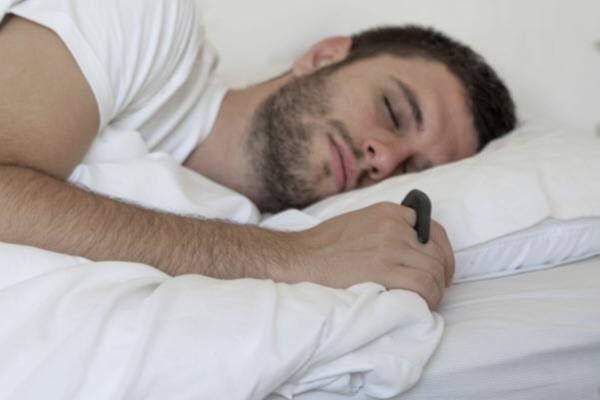
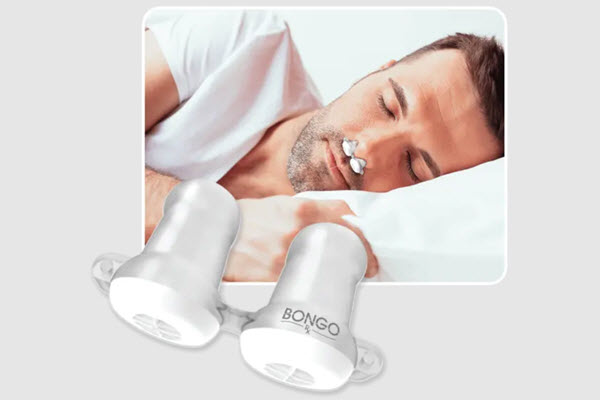
FDA-cleared for obstructive sleep apnea. Small soft cones fit just inside your nostrils. Gentle back-pressure on exhalation keeps your airway open. No mask, no machine, no power cord, no noise.
For some patients, Bongo Rx alone provides complete control of their OSA. For others, the titration study will show that more is needed. Either way, the data answers the question. You will know before the program ends.
You can buy Bongo Rx without a program. Many people do. But without a clinical sleep study during therapy, you are assuming it is working. The program exists because assumption is not treatment.
Each step stands on its own. Proceed only when it makes sense for you.
Total program investment if OSA is confirmed: $698
Follow-up consultations available at $99 each if needed.
100% reimbursable through HSA and FSA. Clinical services including specialist consultations, HST interpretation, and acclimation monitoring are reimbursable through most health insurance plans. Your itemized receipt includes CPT codes for submission.
"I have been using the Bongo Rx for about a year and it has completely changed my life. The device is really well made and extremely comfortable. I am a different person now that I can sleep properly. I have energy that I hadn't had for many years."
"The Bongo Rx has stopped me from snoring. I feel extremely fresh in the morning. It can fit in my travel kit without any problem. I can't believe it's such a simple device and works so well. It has really changed my life."
"Bongo is brilliant for travel which is vital for me. Easy to keep clean and extremely reliable. If you have mild to moderate apnea and can't tolerate a mask, travel a lot, or go camping — elegantly simple, amazingly effective. Pure genius."
"My oxygen levels are way up and I feel SO GOOD when I wake up now. I always hated morning people who were so chipper early in the morning but I get it now. I feel incredible."
"After using a CPAP machine for several years, I got a prescription for Bongo Rx. Two months in and I'm very pleased with the results, ease of use, and ease of cleaning. My wife is enjoying better nights too — none of the noise and leaks from the CPAP. A total success."
"Almost three weeks now and I can't sleep without it. I'm not ashamed to bring my Bongo to my partner's place if I stay over. He's actually over the moon that I don't snore or toss around all night."
"The fitting process took a few days and I did experience some minor irritation. Customer service was extremely helpful and a day off and a little Vaseline cleared that right up. SO much better than a CPAP."
"I noticed the second day how much more energy I had, that I wasn't falling asleep all the time as I had been."
"I like these so much better than CPAP because the CPAP exacerbates my tinnitus. It took a day to get used to the Bongo. Only downside is that they get lost."
"The Belun Ring was simple to use, like wearing a ring. I did not feel it at all when I slept and was able to sleep as usual. It saved me the trouble of staying at a hospital overnight."
"I rely on Belun Ring which gives me a more comprehensive picture of my health. It measures stress level via the autonomic nervous system response and analyzes my data using an AI platform not yet available in other brands. I will recommend it to anyone who wants better health."
"After reading my sleep apnea report, my doctor immediately confirmed it by putting me in a sleep lab for later anesthesia delivery. Belun's sleep apnea test gave me peace of mind."
"The Belun Ring helped me detect sleep apnea comfortably at home. Now with regular exercise and weight loss, I have solved the problem of snoring and sleep apnea."
Takes about five minutes. Results are immediate. If your score indicates elevated risk, your next step is a $99 conversation with a sleep specialist. No further commitment required.
Start Your Assessment at SleepHealthAssessment.comHave questions? Visit our FAQ or contact us and we will be happy to help.